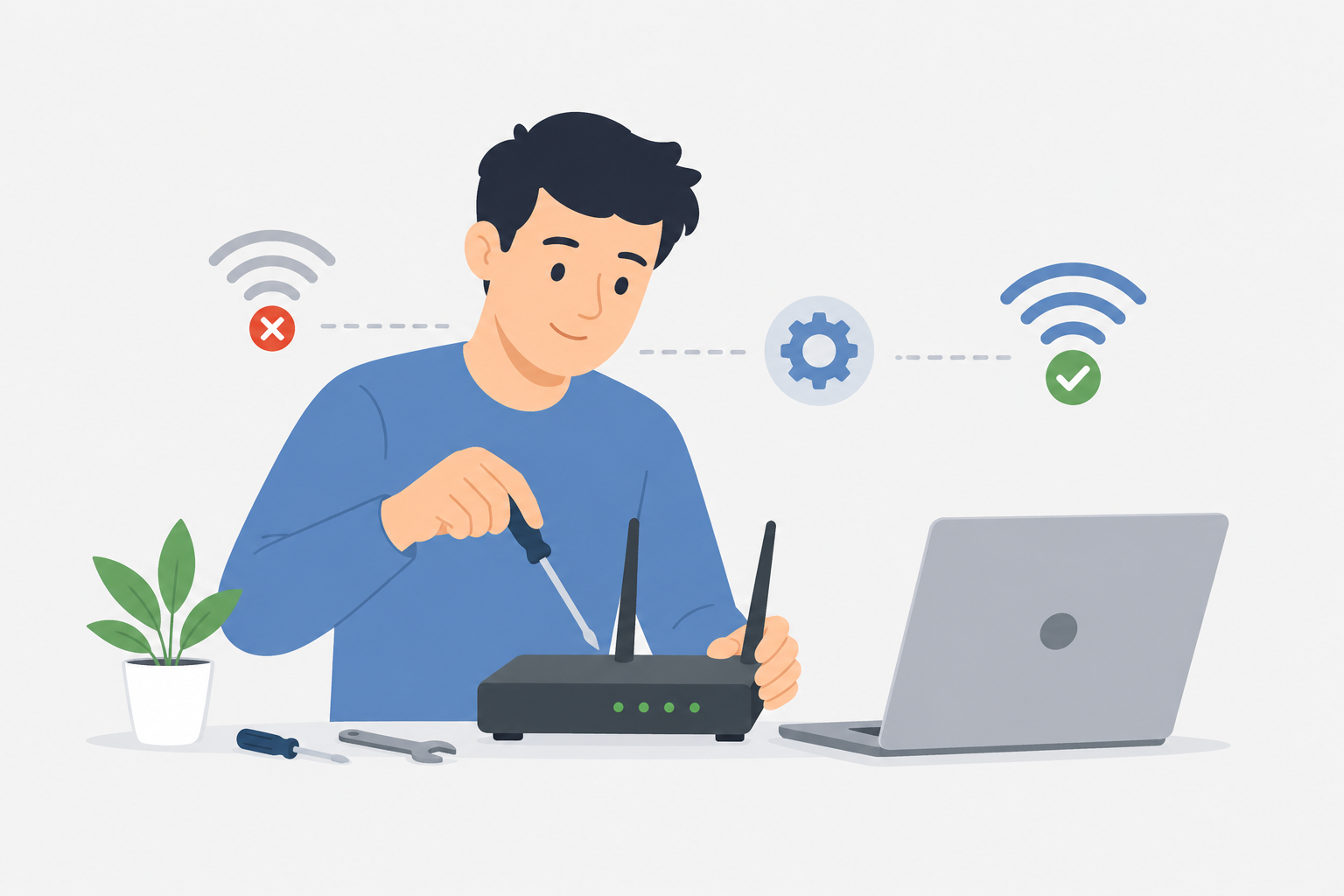
What You Need to Check Before Troubleshooting

preparation is the key to being ready for the art prints in front of you:

Device Check – You should plug in whatever is associated with proper applications in your application form.
Network Details – Keep your WiFi name (SSID) and password handy.
ISP Information – One must know their Internet Service Provider (ISP) and account details in case of emergency.
Router/Modem Access – Aspire to possess faith in a bosom full of hope by sticking together in our hearts!
Cables and Connections – Check Ethernet cables or other forms of wired connection cables for damage and for loose connections.

With these items on hand, you can quickly catch the problem and avoid extra time lost for delays.

Common Reasons Why Your Internet Is Not Working

Internet stopping suddenly usually can indicate several reasons, six of which are:

1. Router or Modem Issues

The Internet connection for your home originates from your modem or router which functions as the main connection point. The Internet connection can be disrupted by basic problems which include temporary glitches , overheating issues and the use of outdated firmware .

2. Network Outages from Your ISP

The problem sometimes occurs because the fault lies outside your system. The Internet Service Provider(ISP) is experiencing service outages which result from their ongoing maintenance work and their current technical difficulties.

3. Weak WiFi Signal or Interference

The strength of WiFi signals decreases when people move away from the source and when obstacles like walls block the signal and when electronic devices such as microwaves and cordless phones create signal interference.

4. Incorrect Network or Device Settings

Your device cannot access the Internet because its network settings have been set up incorrectly. The problem includes incorrect IP address settings and DNS problems and VPN connection issues and firewall access blocks.

5. Device-Specific Problems

The Internet experiences outages which affect only one device at particular times. The problem may arise from three specific issues which include outdated drivers and software conflicts and malware infections. Testing other devices helps determine if the problem.

6. Hardware or Cable Issues

Your internet connection gets interrupted by physical problems which include broken Ethernet cables and loose connections and faulty ports. You should check the cables and replace them if needed because the issue continues after you have restarted the router.

How to Fix Your Internet

This is a help getting your Internet back online:

1. Restart Your Router and Modem

Just try restarting whatever device you are using to connect to the Internet"

    1. Turn off the modem and router.
    2. Wait 30–60 seconds.
    3. Make sure you turned the modem and the modem back on.
    4. Please wait a minute before trying to connect once more.

The simple trick can solve temporary glitches or possible IP conflicts.

2. Check Cables and Connections

Check that all Ethernet cables and power cords and connections are properly secured and their current condition is undamaged. The team should replace all faulty cables because this will help them identify physical problems.

3. Test with Multiple Devices

Ensure other devices can too connect to the network.

  • Most likely, you have disconnected your router, modem, or ISP, in case several devices are offline.
  • There could be two items showing offline status: So, I would want to identify the real one in order to proceed.

  • 4. Reset Network Settings

    For device-specific problems:

    This clearly removes misconfigured settings that may interfere with Internet accessibility.


    5. Update Firmware and Drivers

    Outdated firmware or network drivers can cause issues concerning connectivity.


    Even if you're working remotely, you must keep abreast of the latest developments.

    Frequently Asked Questions (FAQs)

    Q1: Why does my Internet work on one device but not another?

    This is usually a device-specific issue, often caused by outdated drivers, misconfigured network settings, or firewall restrictions.

    Q2: How do I know if my ISP has an outage?

    Check the ISP's website, social media channels, or call customer support to see if there's a known outage in your area.

    Q3: Can malware prevent my Internet from working?

    Yes, malware can interfere with network connections by changing DNS settings or blocking access. A full antivirus scan is recommended.

    Q4: Why is my WiFi slow even when the Internet works?

    Weak signal strength, network congestion, interference from other devices, or router limitations can cause slow WiFi performance.

    Q5: How can I improve my WiFi signal?

    Move your router to a central location, away from walls or interference, or consider using WiFi extenders or mesh networks for better coverage.